Posts

Showing posts with the label Dorothy Dunnett

Mother's Day Thoughts

Image
I just celebrated my first Mother's Day as a mom, while writing a novella in which my heroine is pregnant. While sipping a caramel latte and writing in a café with my daughter, I found myself thinking about mothers in books. So many of them are absent. Jane Eyre, Emma Woodhouse, Anne Elliott, and my own Suzanne all lost their mothers at birth or early in life. When mothers are present in the lives of their fictional offspring, they often create complications. Mrs. Bennet nearly ruins her daughters' marriage prospects. Even the sweet and sympathetic Mrs. Dashwood leans a great deal on Elinor. Percy Blakeney's mother suffered from mental illness and one has the sense she was absent long before she died and took up a great deal of his father's time, so he had an isolated and lonely childhood. My own hero Malcolm had a mother who was an erratic presence in his life growing up and whose death left him scarred in ways he won't talk about. Francis Crawford begins the Lymon...

Missing Scenes

Image
Lauren recently had a very fun contest at Smart Bitches, Trashy Books . Readers got to vote on a sexy cover for the inimitable Turnip Fitzhugh, and now Lauren has posted a love scene between Turnip Fitzhugh and Arabella which did not appear in the wonderful The Mischief of the Mistletoe . It’s a great idea, born about because two different reviewers regretted the lack of a love scene between Turnip and Arabella. It got me to think about “missing scenes” – scenes which don’t take place between the pages of a book which I’ve always wanted to read. For instance: Darcy and Elizabeth’s engagement conversation. Some authors fade to black for love scenes. Jane Austen does it for the final romantic resolution between her heroes and heroines. In many ways it’s a wonderful literary technique, leaving so much tantalizingly to the imagination. And yet I would so like to know what they actually said and did… Peter Wimsey and Harriet Vane after “Placetne, magistra? / Placet. ” and the...

Thoughts on Hamlet

Image
I just got back from an idyllic weekend at the Oregon Shakespeare Festival . I soaked up crisp air and brilliant autumn leaves, caught up with friends, ate some great meals, did some productive writing and plotting. And–the point of my trip–I had the chance to revisit two of my favorite productions from the 2010 OSF season. An enchanting, delightful She Loves Me , directed by Rebecca Taichman, and a riveting, electric Hamlet directed by Bill Rauch, with Dan Donohue in the title role. Two truly phenomenal productions with amazing casts that left me with the rush of exhilaration and wonder I get from really spectacular theater. The night I arrived in Ashland, I picked up my tickets, then ducked out of the rain into the Member Lounge where I had a chance to read the fascinating Hamlet production notes by Judith Rosen. I’ve always seen Hamlet as a Renaissance man caught up in the warrior’s world of the older generation (the conflict between the older generation of warlords and...

Curtain Up - Opening Scenes

Image
I'm in the midst of the first draft of a new book, so book openings have been much on my mind. I blogged a while back about opening lines . But think that opening scenes are in there own way as important as the initial line. Where to start? In the midst of action, which plunges one into the excitement but can be confusing without plot and character details to anchor one and give one someone to root for. With the characters, which sets up the world and can engage sympathies but risks being too slow. And at what point in the story do you open a book? Where does back story leave off and “present day story” begin? Dorothy Dunnett’ s The Game of Kings , the first book in the Lymond Chronicles, begins with the exiled Francis Crawford of Lymond slipping back into Scotland. Action sequence follows action sequence, including a confrontation with Lymond’s family. We see Lymond in action, we see him from the pov of other characters, we learn about him, and we want to know more. It’s an openi...

Rivals & Brothers

Image
San Francisco Opera’s season last fall opened with a fabulous production of Verdi’s Il Trovatore . I was lucky enough to see it three times (the final dress rehearsal, a simulcast at ATT ballpark, and the closing performance). The production updated the setting from medieval Spain to the Peninsular War, which of course I loved. The Goya-inspired setting fit well with a story of war, divided families, and one atrocity leading to another. At the heart of Trovatore’s tangled, over-the-top plot are two brothers, separated at birth, now unknown to each other fighting for opposite sides and rivals for the love of the same woman. Watching the opera, I found myself thinking about brothers in literature. A topic which was also on my mind watching tonight's episode of Lost . Sibling relationships are fascinating, but in historically set stories, inheritance can make the the rivalry between brothers particularly intense. Perhaps especially so in British-set historical stories because of t...

Star Trek, Lost, and Characters that Fascinate

My book, Vienna Waltz, is due February 1st. So since I'm currently in the throes of going through the book through for the last time, layering in more texture, double-checking research facts, making sure my timeline is consistent, and a zillion other things that always seem to be part of the last week of working on a book, I went through old posts on my own blog to see if I could find something to post today. I came across a post I wrote last May on series and characters that fascinate. Which seems particularly apropos, because one of the series I talk about is Lost . When I first wrote this post, the season finale had just aired. Now, the final season is about to premiere (Tuesday, February 2nd, a treat for me after I turn my book in :-). My musing on series started when my friend Penny Williamson and I spent the afternoon of my birthday last May at a matinee of the Star Trek movie. We both loved it. It manages to simultaneously be fresh and innovative and yet true to the origi...

The Marriage of Two Minds

Image
I seem to have a knack for missing RWA conferences where my friends win Rita Awards. I wasn't at either of the conferences where my friend Penelope Williamson won twice in the 90s. In those pre-internet days, I didn't know she'd won until she got back from the conference and telephoned me. Last Saturday, thanks to Twitter, I knew Pam had won the Rita for Best Historical Romance for her wonderful The Edge of Impropriety at almost the same moment it was announced from the stage. One of the things I love about Pam’s writing is that her characters have, in Regency terms, “a keen understanding”–they’re brainy people who enjoy talking about ideas ( The Edge of Impropriety’s hero and heroine are a classical scholar and a Silver Fork novelist respectively). This past week, while a lot of my writer friends were at RWA, a post by Jean on the All About Romance blog on “The Beautiful Minds of Heroes” got me thinking more about brainy characters. The first brilliant hero Jean menti...

Infidelity - the dark side of romance?

Image
am It’s at the heart of the conflict in Casablanca, Tristan & Isolde, The English Patient, Anna Karenina, Notorious, Brief Encounter, The Painted Veil , and countless classic love stories. And yet for many readers, it’s a deal-breaker, particularly when it comes to genre romance. As a reader and a writer, I don’t dislike infidelity or adultery plots per say. Infidelity is an uncomfortable subject but uncomfortable subjects can make for good drama. It can definitely be a challenge to give a story a happy ending after someone’s been unfaithful. Of all of the stories I mentioned at the start of the post, only Notorious has a conventional happily-ever-after ending. The others have unhappy or bittersweet endings. If the marriage survives the infidelity, you need to believe that the couple can get past it, that it won’t happen again, that the betrayed partner won’t constantly blame the unfaithful partner (which is pretty mucht he conversation Steve and Miranda have with their marriage ...

A Different Kind of History - Damaged Characters

Image
No, I’m not talking about the damage an author can inflict with one too many rounds of revising (though that would make an interesting blog topic in and of itself). I’m thinking of characters who are damaged by their past experiences, whether it’s a painful childhood, battlefield trauma, the morally ambiguous life of a spy, or a love affair gone tragically wrong. Which comes down to the focus of this blog--history. Whether it's real historical events, such as the brutal aftermath of the Siege of Badajoz, or fictional history, such as a lover's betrayal or parental neglect, the scars of the past create damaged characters. To explore and heal that damage, a writer has to delve into the character's history. As a reader and writer, I've always been fascinated by history, both real historical events and the history of fictional characters (I love sequels and prequels, seeing characters at differnet points in their lives, part of what I so enjoyed about the new Star Trek mov...

Stories that Cry Out for Discussion

Image
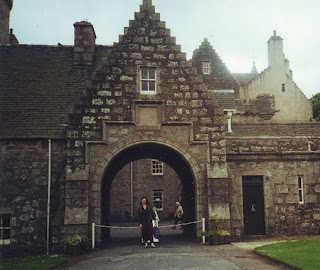
My friend and fellow writer Penny Williamson and I spent a wonderful afternoon Saturday at a party of Dorothy Dunnett readers (that's Penny and me left in Edinburgh, on a trip where we went to a Dunnett-related conference). Dunnett readers tend to be a fun, well-read, and extraordinarily nice group of people. Over tea and wine and a delicious array of food Saturday we talked about books by Dunnett and others as well as favorite television series. There’s something about Dunnett’s books that particularly lends them to discussion and analysis. They’re so complex and multi-layered. The books aren’t mysteries, but there are mysteries running through both the Lymond Chronicle and the House of NiccolĂł which provide endless food for debate and speculation. Even now both series are finished, plenty of unresolved questions remain. Add to that vivid historical context, rich literary allusions, and a fascinating cast of characters, and it’s hard to read Dunnett and not want to talk about th...