Posts

A British Treasure

Image
In the spring of 1986 I absorbed a museum exhibit that ranks as the best in my experience. "The Treasure Houses of Britain" was seen by almost one million people during its five months at Washington's National Gallery of Art. Like most of the visitors I was amazed, impressed, "gobsmacked" not only by the sheer opulence of the treasures but also by their artistic merit. Whenever I haul out the 600page/7 pound catalog I lose myself for hours and today alone I came up with tree subjects for future blog posts. Here are a few notes about the Treasure Houses exhibit. According to the National Gallery of Art website more than 700 objects were gathered from more than 200 homes in Great Britain representing collecting and domestic arts from the 15th to the 20th century. Gervase Jackson-Stops chose the art work and the exhibit was structured to showcase each period of collecting. Seventeen period rooms were built to display the objects. "The Treasure Houses of Brit...

Promissory Notes: Reading Theory on Vacation

Image
Amanda's not the only hoyden who's been on the road lately. I recently returned home to San Francisco after a fantastic three weeks doing my Northeast Family Corridor Circuit (New Haven-New York-Philadelphia) for many hugs, visits, and bigtime celebrations, including my sister's wedding (more soon at my own blog ) and my son's PhD conferral from Columbia (next year the Corridor gets longer, when Jesse begins teaching English at Johns Hopkins in Baltimore; I'm delighted that the cheap and comfortable Bolt Bus goes there too). Unusually for me, I didn't make a lot of plans, except to get to the celebrations on time. With more people to visit than I had time for, and my husband, sadly, only able to get off work for the wedding and the degree ceremony (the last long weekend of the trip) I decided to take the solo part of it slow, to follow my nose and my luck: as when my friend Barbara Garson introduced me to an artist friend of hers in the locker room of the Che...

WHO Slept Here? I Did! Staying at Places with a Past

Image
My husband and I just returned from about ten days down South. In New Orleans we stayed at the Lamothe House on Esplanade Avenue, bordering both the Vieux Carré and the Marigny district. Built in the 1830s for a sugar baron, it was one of the first double-wide (so to speak) mansions in the French Quarter, and was completely renovated in 1860. What you see in the photo below is the dining room where guests have their complimentary, though disappointing, breakfast, consisting primarily of packets labeled Quaker or Kellogg. But that's not the point of my post. Lamothe House dining room The wide planked floors slope; the treads of the winding double staircase buckle under your feet as you mount them; the Victorian-era furniture is scratched, the upholstery tatty, and the underpinnings barely there because thousands of butts have sat there over the last three centuries, counting our own (butts and centuries). Frankly my dears, it's those bygone butts that fascinate me. Lamothe House...

Medals and Ribbons

Image
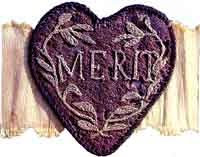
In the US, the last Monday in May is celebrated as a national holiday, Memorial Day. It is a day of official recognition of men and women who have died in military service to their country. In its early days this holiday was called Decoration Day and was originally instituted after the Civil War to honor soldiers who fought for the Union. General Order #11 states that “The 30th day of May, 1868, is designated for the purpose of strewing with flowers, or otherwise decorating the graves of comrades who died in defense of their country during the late rebellion, and whose bodies now lie in almost every city, village, and hamlet churchyard in the land. In this observance no form or ceremony is prescribed, but Posts and comrades will, in their own way, arrange such fitting services and testimonials of respect as circumstances may permit.” Since World War I Memorial Day has been recognized as a day to reflect on the loss of life in any military action or war. Memorial Day is often confused w...

The 10 Most Important Kisses in History

Image
I saw this article on CNN yesterday and it was just too good to pass up. So I am posting in its entirety, with my comments at the bottom. From : www.cnn.com/2009/LIVING/wayoflife/05/20/mf.ten.important.kisses/index.html “Pucker up as we explore 10 smooches that changed religion, art, culture, and history. " 1. The Kiss of Judas: A betrayal or just misunderstood? Nothing ends a good "bromance" quite like flagrant, murderous betrayal. A long time ago, a wandering preacher named Jesus was doing pretty well for himself -- building up a following and promoting religious teachings -- until one of his buddies sold him out to the authorities. In exchange for 30 pieces of silver, Judas Iscariot kissed Jesus on the cheek and, by doing so, identified him to Roman soldiers. Although Judas double-crossed his best friend for a paltry sum, some scholars argue that Judas is the secret hero of Christianity. The claim is based on a recent translation of The Gospel of Judas, a text written...

A Different Kind of History - Damaged Characters

Image
No, I’m not talking about the damage an author can inflict with one too many rounds of revising (though that would make an interesting blog topic in and of itself). I’m thinking of characters who are damaged by their past experiences, whether it’s a painful childhood, battlefield trauma, the morally ambiguous life of a spy, or a love affair gone tragically wrong. Which comes down to the focus of this blog--history. Whether it's real historical events, such as the brutal aftermath of the Siege of Badajoz, or fictional history, such as a lover's betrayal or parental neglect, the scars of the past create damaged characters. To explore and heal that damage, a writer has to delve into the character's history. As a reader and writer, I've always been fascinated by history, both real historical events and the history of fictional characters (I love sequels and prequels, seeing characters at differnet points in their lives, part of what I so enjoyed about the new Star Trek mov...

A Pin & A Prayer

Image
On a previous post I commented that often women’s clothing was held together by little more than “pins and a prayer”. Janet Mullany responded by asking if this was true of the clothing of the upperclass, and the answer is yes. Actually, it’s far more likely to be true of the clothing of the moneyed than of the poor (pins were expensive!). As far back as Ancient Greece (and probably even further), gowns were little more than lengths of fabric held together at the shoulder by pins of some sort (fibula to the Romans). During the Tudor and Elizabethan periods, gowns frequently fastened with pins (generally eithe r up the side-front of the bodice or where the gown joined the stomacher). If you look closely at portraiture of the day, you can even see these pins portrayed (usually as a series of small dots along a seam, as in this detail of a Holbein painting of Jane Seymour). In the 18th century, it was extremely common for gowns to be held together by nothing more than pins (they were used...